Seasonal Challenges for Diabetics: Managing Blood Sugar Through India’s Weather Changes
26 Mar, 2026
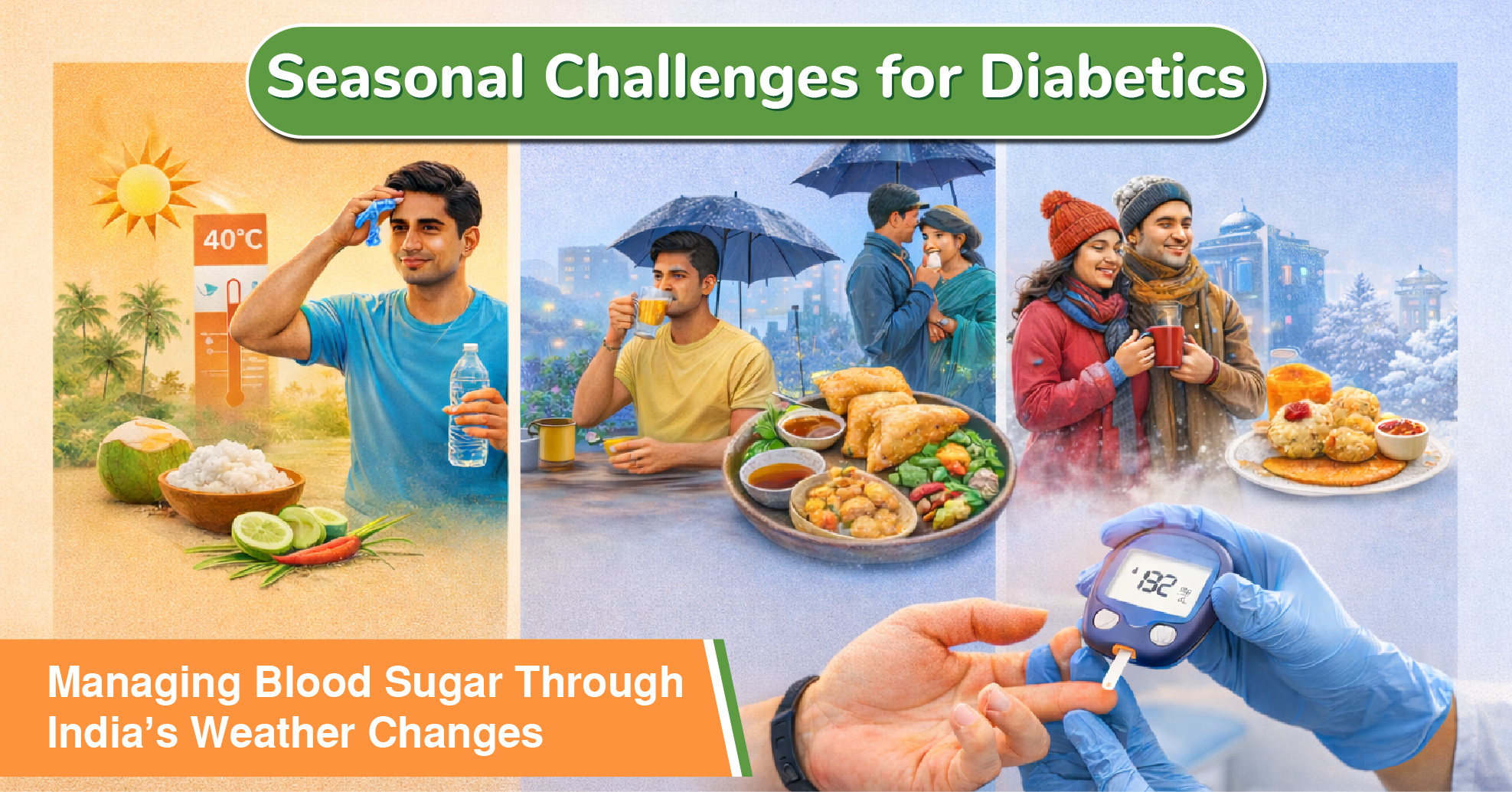
Seasonal weather changes can significantly affect blood sugar levels in people with diabetes. In India, extreme heat, monsoon humidity, and winter cold influence insulin sensitivity, hydration status, appetite, physical activity, and stress hormones — all of which can lead to blood sugar fluctuations if not managed proactively.
Introduction
Diabetes managementis not static. Blood sugar levels are influenced not only by food, medication, and physical activity but also by environmental factors such as temperature, humidity, and seasonal routines. In India, where climate conditions vary widely across the year, many people with diabetes notice changes in glucose control as seasons shift.
Hot summers, humid monsoons, and cooler winters each present unique challenges. These seasonal changes can affect hydration, appetite, infection risk, physical activity, and even how the body responds to insulin.
Understanding how India’s weather patterns impact blood sugar allows individuals with diabetes to adapt their lifestyle strategies and maintain better glycaemic stability year-round.
How Weather and Seasons Affect Blood Sugar
Temperature and Insulin Sensitivity
Both extreme heat and cold can alter how the body uses insulin:
- Heat may increase insulin absorption and risk of low blood sugar
- Cold can reduce insulin sensitivity, leading to higher glucose levels
Seasonal adjustments in diet, activity, and monitoring are therefore essential.
Behavioural and Lifestyle Changes
Weather influences daily routines:
- Reduced activity during extreme heat or rain
- Changes in food choices and portion sizes
- Altered sleep patterns and stress levels
These indirect effects often contribute as much to blood sugar fluctuations as the weather itself.
Managing Diabetes During Indian Summers
Summer-Specific Challenges
Indian summers are characterised by high temperatures and dehydration risk. Common issues include:
- Increased sweating and fluid loss
- Reduced appetite or irregular meals
- Higher risk of hypoglycaemia due to faster insulin absorption
Dehydration can falsely elevate blood sugar readings and increase fatigue.
Practical Tips for Summer Blood Sugar Control
- Drink water regularly, even without thirst
- Avoid sugary drinks and fruit juices
- Eat smaller, balanced meals at regular intervals
- Monitor blood sugar more frequently during heatwaves
- Choose light physical activity during cooler hours
Maintaining hydration is one of the most effective ways to support glucose stability in summer.
Diabetes Management During the Monsoon Season
Unique Monsoon Challenges
The monsoon season brings high humidity, reduced sunlight, and increased infection risk. For people with diabetes, this may lead to:
- Reduced physical activity due to rain
- Increased cravings for fried or comfort foods
- Higher risk of skin and foot infections
- Blood sugar variability due to disrupted routines
Humidity can also affect glucose meter accuracy and insulin storage.
Monsoon-Friendly Blood Sugar Tips
- Maintain indoor physical activity routines
- Focus on home-cooked, freshly prepared meals
- Practise careful foot hygiene and skin care
- Store insulin and testing supplies in dry conditions
- Manage stress and sleep quality during gloomy weather
Consistency in routine becomes especially important during the monsoon months.
Managing Blood Sugar During Indian Winters
Winter-Related Blood Sugar Changes
Although winters in many parts of India are mild, cooler temperatures can still affect diabetes management:
- Reduced insulin sensitivity
- Increased appetite and comfort eating
- Lower physical activity levels
- Higher fasting blood sugar readings
Cold weather may also mask symptoms of low blood sugar, such as sweating.
Winter Diabetes Care Strategies
- Maintain regular physical activity, even indoors
- Balance seasonal foods with adequate fibre and protein
- Monitor fasting and post-meal glucose closely
- Avoid excessive intake of refined carbohydrates
Structured routines help prevent gradual glucose elevation during winter.
Seasonal Diet Considerations for Diabetics in India
Adapting Food Choices by Season
A season-aware approach to nutrition supports blood sugar stability:
- Summer: Hydrating foods, vegetables, adequate protein
- Monsoon: Warm, freshly cooked meals, digestive balance
- Winter: Fibre-rich foods, controlled portions, adequate protein
Across all seasons, avoiding highly processed foods and excessive sugars remains essential.
Physical Activity and Seasonal Adjustments
Regular movement is critical for insulin sensitivity, but weather often disrupts exercise routines.
- Shift outdoor activity timing in summer
- Use home-based workouts during monsoon
- Maintain consistency during winter despite reduced motivation
Even light, daily movement helps reduce seasonal glucose variability.
Common User Questions
Why does blood sugar change with seasons?
Temperature, hydration, activity levels, and stress hormones all change with weather, directly affecting glucose metabolism.
Is summer or winter worse for diabetes?
Both seasons pose challenges. Summer increases dehydration and low sugar risk, while winter often raises blood sugar due to reduced insulin sensitivity.
Should diabetics monitor more often during seasonal changes?
Yes. More frequent monitoring helps identify patterns and adjust lifestyle habits early.
FAQs
1. Does hot weather lower blood sugar?
A: It can, due to faster insulin absorption and dehydration.
2. Can cold weather raise blood sugar levels?
A: Yes. Cold may reduce insulin sensitivity.
3. How does monsoon affect diabetes control?
A: Disrupted routines and reduced activity can increase glucose variability.
4. Should diet change with seasons?
A: Yes. Seasonal foods should be balanced to support glucose control.
5. Are infections more common in some seasons?
A: Yes. Monsoon humidity increases infection risk, which can raise blood sugar.
Key Takeaways
- India’s seasons significantly influence blood sugar control
- Summer, monsoon, and winter each present unique challenges
- Hydration, routine, and monitoring are critical year-round
- Seasonal adjustments improve long-term diabetes management
Conclusion
Managing diabetes effectively in India requires awareness of how seasonal weather changes influence blood sugar levels. Understanding blood sugar control in different seasons is important, as heat, humidity, and cold each affect insulin sensitivity, hydration, physical activity, and dietary habits. By adapting nutrition, movement, and monitoring strategies to each season, people with diabetes can reduce glucose fluctuations and maintain better metabolic control throughout the year.
Trigotab is formulated using fenugreek-based ingredients that align with nutritional approaches aimed at supporting blood sugar balance. When used alongside season-specific lifestyle adjustments, regular monitoring, and medical guidance, such formulations may complement broader strategies for managing diabetes across India’s changing climate.